
One of the world’s greatest science walks!
This one-hour audio walking tour comes with a song and a story, and takes you in the footsteps of the great scientist Sir William Rowan Hamilton, on the day in 1843 when he had a flash of inspiration, and invented Quaternions, the equation that would later put a man on the Moon. See below for route, content and access.

Audio guide content

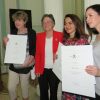
Canal-side: Mary Mulvihill from Ingenious Ireland (left) with sound recorder Aileen O’Meara (right), Noel Spain, Royal Canal amenity group.
Stories in this 1-hour audio guide include: how this Irish algebra helped to land a man on the Moon, also the engineering of the Royal Canal and canal locks, the railway, the discovery of singular Soliton waves — which happened beside another canal — and more.
We recorded this podcast on the Hamilton Walk on October 16th 2011, the anniversary of Hamilton’s Eureka! moment. We have interviews with people on the day, including Jack Gannon, who wrote our theme song the Ballad of William Rowan Hamilton.
Hamilton walk route
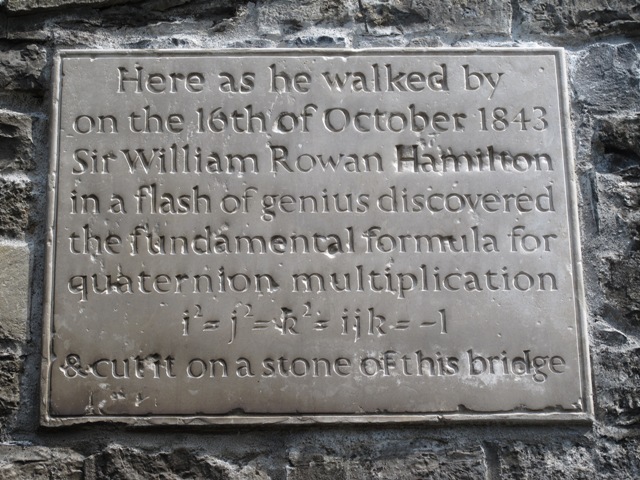
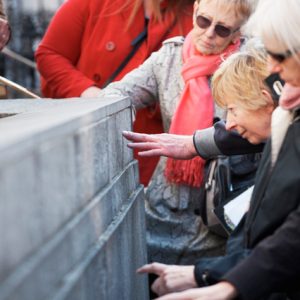
Hamilton plaque at Broombridge
See the Google map of the route and stops. Start near Dunsink Observatory, where Hamilton lived and worked all his life, then down hill to follow the Royal Canal towpath east to Broombridge, where Hamilton scratched his quaternion equation in the stonework. The Observatory is not normally open to the public, so our route starts on Scribblestown Road, above the entrance to Teagasc National Food Centre (and just below the observatory). The route is 4 km long, and wheelchair accessible. The annual commemorative walk is every October 16th from Dunsink Observatory.
Discovery of Solitons
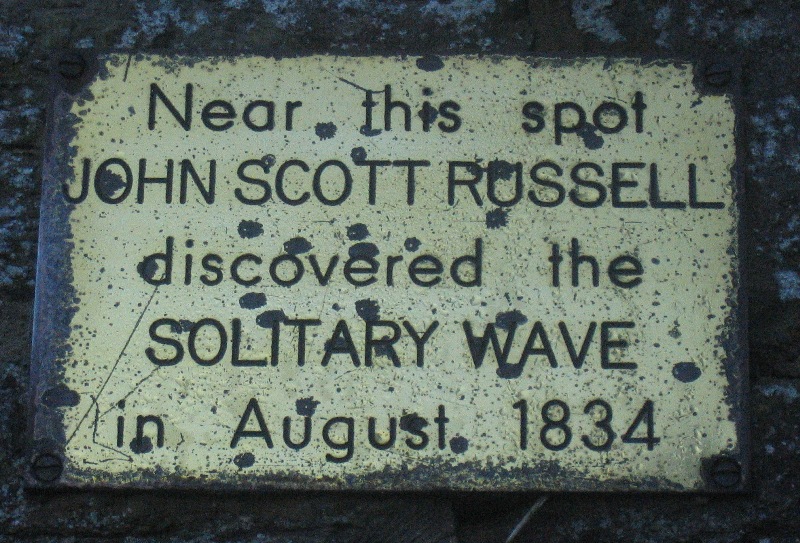 Singular waves or solitons, were discovered beside a canal near Edinburgh by John Scott Russell in 1834. You can see a modern photograph of a soliton on the canal, recreated for an international conference in 1995. Here’s how Russell described his discovery on the day. A commemorative plaque marks the spot, just as at Broombridge.
Getting there
The train is a convenient way to do this walk. The Dublin-Maynooth railway follows the Royal Canal, with stations at Ashtown and Broombridge. Get the train to Ashtown, for the start of the walk, and a train at Broombridge at the end.
Royal Canal & Dunsink Observatory
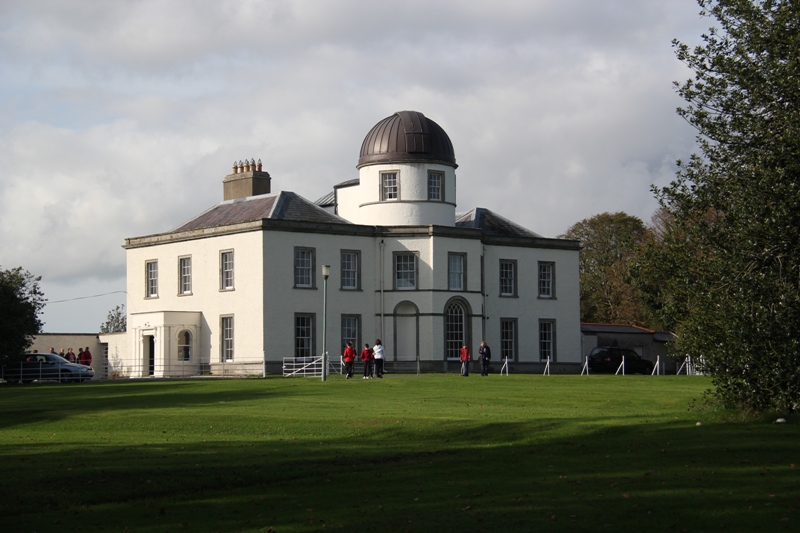
Dunsink Observatory
Dunsink Observatory is open to the public on the first and third Wednesday of each month from October to March. Admission is free, but booking is recommended.
The Royal Canal: The official Waterways Ireland Royal Canal information site is packed with information on this historic waterway. See also: Ruth Delaney’s book, Ireland’s Royal Canal, 1789-2009 and Irish Waterways History website.
Project partners
This project was supported by Maths Week Ireland and the Irish Research Council for Science, Engineering & Technology (IRCSET)